Best War Movies
War films ask more of us than most genres, because behind every uniform is a person who wanted, more than anything, to get home. When people search for the Best war movies, they are rarely looking for noise and spectacle alone. They are looking for stories about courage, fear, loyalty, and the strange bonds that form when ordinary people are placed in impossible situations, and those are the stories this list keeps coming back to.
Some of these films are large and thunderous, others are quiet and almost unbearably tense, and a few will change how you think about history altogether. A couple are also among the best movies based on true stories, which only deepens their impact. Whatever your mood, there is a film here worth your evening, and worth remembering long after the credits finish.
How We Picked These Movies
We built this list by looking for films that have stayed with audiences for years, not just films that opened loudly and faded. Every pick had to hold up on a second viewing, say something honest about the people inside the war, and earn its emotional moments rather than borrow them. We also balanced eras and settings, so the list moves from world wars to Vietnam, from submarines to animated masterpieces, instead of repeating one kind of story twelve times.
- Audience response: Films that viewers still recommend, revisit, and pass on to friends decades after release.
- Critic reviews: A strong record with reviewers and film historians, including places on major all-time lists.
- Ratings: Consistently high audience and critic ratings across trusted review sources, without chasing one score alone.
- Rewatch value: Movies that reveal new details, performances, or ideas when you return to them.
The List: War Films That Endure
Saving Private Ryan (1998)
Directed by Steven Spielberg, this World War II story follows a small unit sent across Normandy after D-Day to find one missing soldier and bring him home. Its opening battle sequence is famous for its raw realism, but the film’s real power is quieter: the conversations, doubts, and humor of men trying to stay human. Tom Hanks gives a beautifully restrained performance, and the film never lets you forget the cost carried by everyone involved, on every side of the mission.
Best for: A powerful, emotional introduction to the genre.
Apocalypse Now (1979)
Francis Ford Coppola’s Vietnam epic sends Captain Willard upriver on a secret mission, and the journey slowly becomes a descent into the moral confusion of the war itself. It is hypnotic, strange, and visually astonishing, with scenes that feel half like history and half like a fever dream. Martin Sheen and Marlon Brando anchor a film that is less about winning or losing and more about what war does to the mind. Few war films are this ambitious, or this haunting once they settle into your memory.
Best for: Viewers who want a bold, artistic, unforgettable experience.
The Bridge on the River Kwai (1957)
David Lean’s classic, set in a prisoner-of-war camp in Burma, centers on British Colonel Nicholson, played by Alec Guinness, who becomes obsessed with building a perfect bridge for his captors. What begins as a story of pride and discipline turns into a sharp study of duty taken too far. The film is patient, beautifully shot, and full of tension that builds without rushing. Its famous whistled march is cheerful on the surface, which makes the questions underneath it — about honor, collaboration, and pride — linger even longer.
Best for: Classic film lovers and fans of slow-building tension.
Platoon (1986)
Oliver Stone, who served in Vietnam himself, directed this raw story of a young soldier caught between two sergeants who represent very different ideas of how to survive a war. Willem Dafoe and Tom Berenger are both outstanding, and the jungle setting feels humid, confusing, and morally exhausting in the best sense. The film refuses easy heroes, showing how fear and exhaustion can erode good intentions. It remains one of the most honest American films about Vietnam, and one of the most debated, for good reason.
Best for: A grounded, hard-hitting look at Vietnam from the ground.
Full Metal Jacket (1987)
Stanley Kubrick’s film is really two stories: a brutal Marine training camp in the United States, then a move to Vietnam where a young journalist faces the war’s confusion firsthand. The training sequences, led by R. Lee Ermey’s unforgettable drill instructor, are intense and darkly quotable, while the second half turns colder and more unsettling. Kubrick’s precise style makes every scene feel controlled even when the characters are not. It is a film about how people are reshaped, piece by piece, long before they ever see combat.
Best for: Sharp dialogue and a director with total control.
Paths of Glory (1957)
Also directed by Stanley Kubrick, this First World War film stars Kirk Douglas as a French officer defending soldiers accused of cowardice after a hopeless attack. Much of it plays like a courtroom drama, and that is its strength: it shows how decisions made far from the trenches can matter as much as anything that happens in them. The tracking shots through the trenches are stunning for any era. Short, focused, and quietly furious, it is one of the finest anti-war films ever made.
Best for: A short, powerful classic with a strong moral core.
Dunkirk (2017)
Christopher Nolan tells the story of the 1940 evacuation of Allied soldiers from the beaches of Dunkirk through three interwoven timelines: land, sea, and air. Dialogue is minimal, and the tension comes from time itself — rising water, falling fuel gauges, and rescue boats crossing a dangerous channel. Hans Zimmer’s score ticks like a clock underneath everything. It is less a traditional war story and more an experience of waiting, hoping, and helping, and it honors the civilians who sailed toward danger to bring strangers home.
Best for: Pure tension and stunning large-format cinematography.
1917 (2019)
Sam Mendes directs this First World War story about two British soldiers sent across enemy territory to deliver a message that could save a battalion. The film is presented as one continuous shot, following the pair through trenches, ruined farms, and rivers without letting the audience look away. George MacKay is excellent as a young man running almost entirely on duty and exhaustion. Inspired by stories Mendes heard from his grandfather, the film feels personal as well as spectacular, and it is commonly available on Netflix in many regions.
Best for: An immersive, race-against-time story filmed with real craft.
Das Boot (1981)
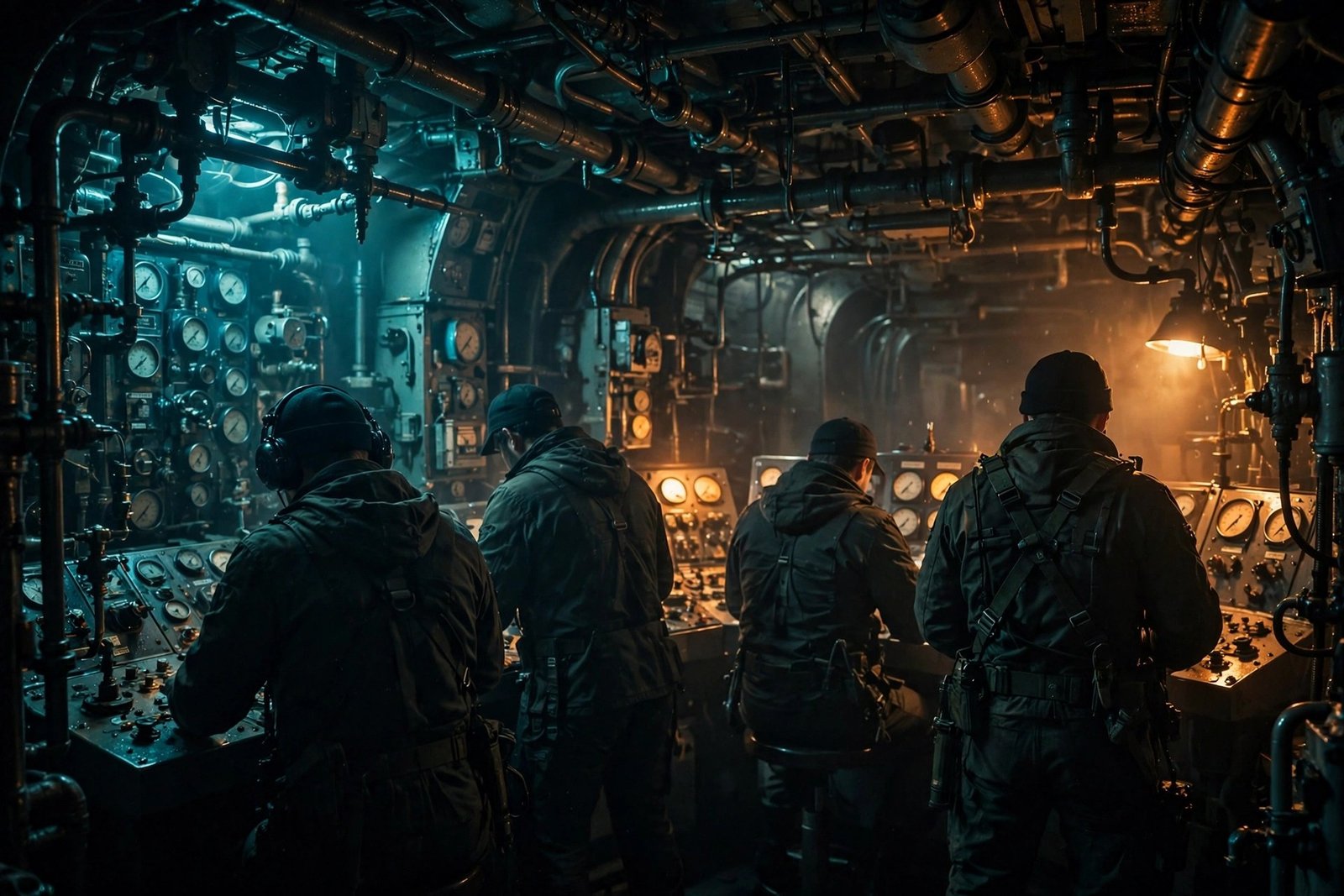
Wolfgang Petersen’s German film spends nearly its entire running time inside a U-boat on patrol in the Atlantic, and it may be the most claustrophobic war film ever made. You feel every creak of the hull, every long silence while depth charges fall, and every brief moment of relief when the crew surfaces. Because it shows the war from the German side, it reminds you that fear feels the same in any language. Long, patient, and completely absorbing, it rewards viewers who settle in.
Best for: Submarine tension and a different perspective on World War II.
Grave of the Fireflies (1988)
Isao Takahata’s animated film from Studio Ghibli follows a teenage boy and his little sister trying to survive in Japan during the final months of World War II. Animation lets the film hold both beauty and heartbreak in the same frame, from glowing fireflies to empty streets. It is gentle in tone and devastating in effect, focusing on the civilians — especially children — whom war stories often leave at the edges. Keep tissues nearby. It is a masterpiece, but one you should choose when you are ready for it.
Best for: The most moving film on this list, animated or otherwise.
Come and See (1985)
Elem Klimov’s Soviet film follows a Belarusian teenager who joins the resistance during the Nazi occupation and witnesses the war’s effect on villages and families. It is widely regarded as one of the greatest war films ever made, and also one of the most demanding: the camera stays close to the boy’s face as his world changes beyond recognition. The sound design alone is extraordinary. This is not an easy evening’s viewing, and it does not try to be, but serious film lovers should see it once.
Best for: Committed film fans ready for a profound, challenging classic.
Fury (2014)
David Ayer’s film follows an American tank crew in the final weeks of World War II, led by Brad Pitt’s battle-worn sergeant, as a young clerk is assigned to their tank with no combat experience. The cramped interior scenes are the film’s strength: five men, one machine, and arguments, jokes, and grief shared in a space barely bigger than a closet. The battle sequences are intense without feeling weightless. It is a modern war film in style, but its heart is an old story about mentorship and survival.
Best for: A modern, character-driven World War II story.
How to Choose Your Next Watch
Start with your mood rather than the battle count. If you want emotional weight with a clear story, begin with Saving Private Ryan or 1917. If you prefer older classics, The Bridge on the River Kwai and Paths of Glory pair beautifully on a double-bill weekend, and together they show how differently two films from the same year can approach duty and pride.
For something more unusual, try Das Boot when you have an unhurried evening, or Grave of the Fireflies when you want the home-front side of war rather than the battlefield. Come and See is essential viewing, but save it for a night when you can sit with it afterward. War films are rarely light entertainment, and the best ones ask for a little quiet when they end. Give them that, and they tend to stay with you for years.
If you enjoy building themed collections like this one, the wider Movie Lists category is a good place to keep exploring between movie nights.
Frequently Asked Questions
What is the best war movie for someone new to the genre?
Saving Private Ryan is the most common starting point, and for good reason: the story is clear, the characters are easy to follow, and the emotional stakes are there from the start. If you prefer something less intense, Dunkirk builds enormous tension while focusing on rescue and endurance rather than combat scenes, which makes it an excellent first step into the genre for many viewers.
Are these war movies based on real events?
Several are inspired by real events or real experiences. Dunkirk dramatizes a genuine evacuation, 1917 grew from family stories of the First World War, and Platoon draws on its director’s own service in Vietnam. Others, like Paths of Glory, blend real settings with fictional characters. That mix is normal for the genre, and the strongest films are honest about the human truth even when individual scenes are dramatized.
Which war movie on this list is the most intense?
Come and See is usually considered the most demanding, not because of action spectacle but because of how closely it follows its young main character through an occupied homeland. Apocalypse Now is intense in a different, more psychological way, while Saving Private Ryan opens with one of the most famously realistic battle sequences in cinema. Choose according to the kind of intensity you feel ready for.
Is there a good war film here for family viewing?
War films deal with serious subjects, so most of these suit older teenagers and adults rather than young children. Dunkirk is often the recommendation for families with older teens because its focus is survival and rescue. Grave of the Fireflies is animated, but its story is very sad and deals with loss, so it is better for mature viewers despite the gentle artwork and young characters at its center.
Why are there two Stanley Kubrick films on the list?
Because they do completely different things. Paths of Glory is a focused First World War drama about justice and command, while Full Metal Jacket is a two-part story about training and Vietnam made thirty years later. Kubrick returned to the genre across his career, and both films have influenced generations of directors. Leaving either one out would have made the list weaker, so both earned their place on merit.
Final Thoughts
The best war films are never really about glorifying battle. They are about the people inside it: the frightened, the loyal, the stubborn, and the kind, and about how much ordinary decency matters when everything around it breaks down. That is why the films above have lasted — each one respects its subject enough to be honest about it.
Pick one for this week, watch it without your phone nearby, and let it sit with you for a day before you judge it. Then come back for the next. Lists like this are best enjoyed slowly, one unforgettable story at a time.